In the fast paced world of quantitative finance, particularly within the volatile cryptocurrency market, having access to low latency crypto data feeds and robust analysis tools is essential for executing successful algorithmic trading strategies. Modern quantitative analysts and developers require a highly reliable infrastructure to stay ahead of market movements.
While platforms like TradingView and CoinMarketCap have long established their solid positions as monumental tools for visual analysis and market research, the recent emergence of Coinwatch, a high-performance crypto market data API platform, brings a critical missing piece to the puzzle. Together, these tools form an excellent data backbone for developers, quants, and algorithmic traders looking to build a complete crypto data pipeline.
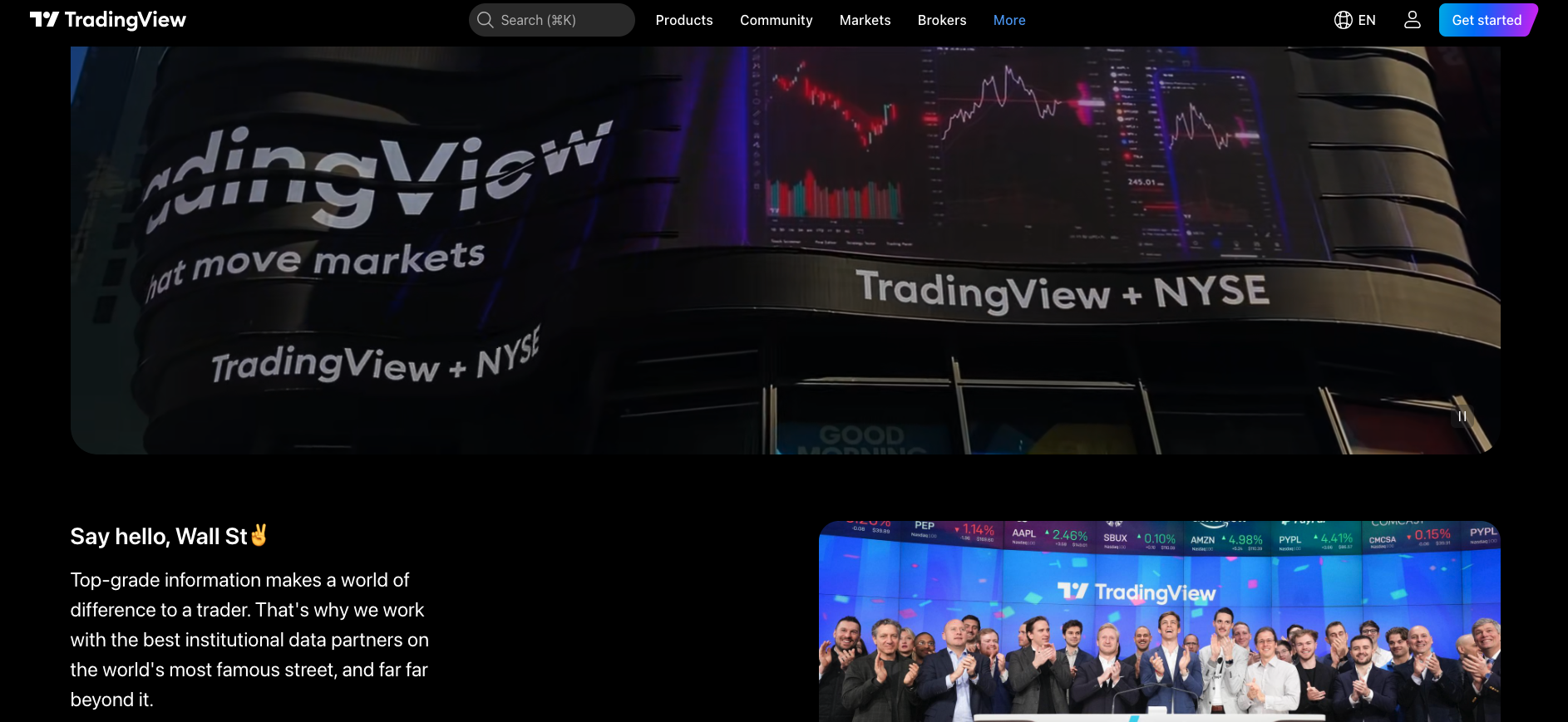
TradingView serves as the ultimate interface for technical analysis. It is recognized globally as the largest online charting platform, offering an intuitive environment equipped with advanced technical indicators. For quantitative analysts, the integration of Pine Script is particularly valuable, as it allows them to write and backtest custom trading algorithms visually before deploying them in production environments. The platform also features a powerful webhook alert system that can trigger automated trading bots based on precise indicator conditions. Ultimately, TradingView functions as an irreplaceable visual sandbox for prototyping algorithmic strategies and defining entry and exit logic based on price action.
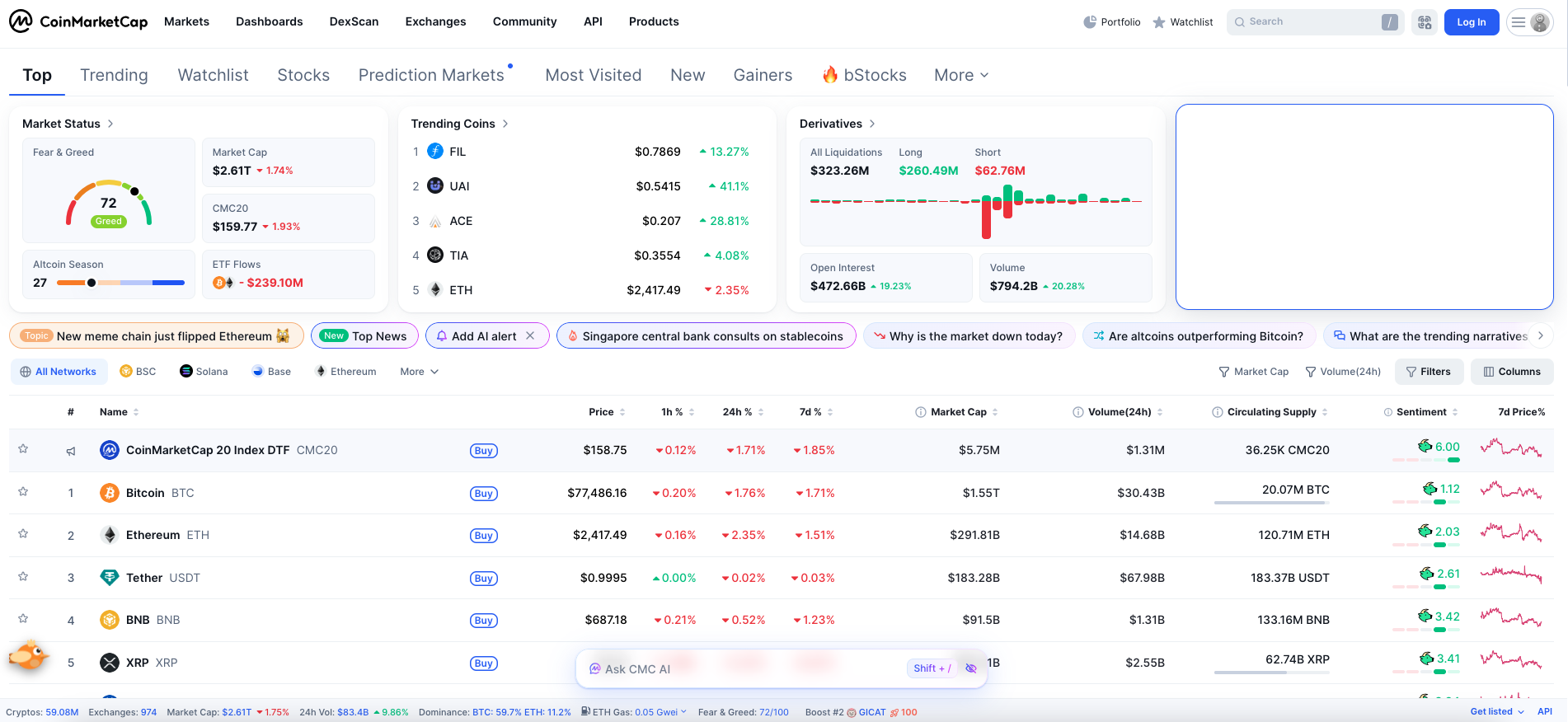
To complement this technical analysis, CoinMarketCap acts as the encyclopedia for market fundamentals. It provides a lightning-fast macroeconomic overview, delivering critical data such as total market capitalization, 24-hour trading volume, and Bitcoin dominance. For algorithms that need to determine which assets possess the required liquidity and market capitalization for safe automated trading, CoinMarketCap offers a reliable filter. Developers frequently utilize its general market data API to fetch daily macro snapshots or top token lists to dynamically rebalance their algorithmic portfolios based on emerging sectors like decentralized finance or artificial intelligence.
If CoinMarketCap is used for macro filtering and TradingView for visual strategy prototyping, Coinwatch solves the most critical engineering problem: providing a low latency crypto data feed and a unified API architecture to actually execute those algorithmic trades. For a long time, quantitative developers have struggled with the fragmentation of the top cryptocurrency exchanges. Managing direct connections to platforms like Binance, Coinbase, and Kraken simultaneously requires handling diverse WebSocket lifecycles, disparate REST pagination schemas, and unpredictable rate limits. Designed specifically as a developer-first crypto API for algorithmic trading, Coinwatch completely eliminates this extensive infrastructure overhead. It abstracts the complexity of multiple exchanges into a single, highly reliable data stream.
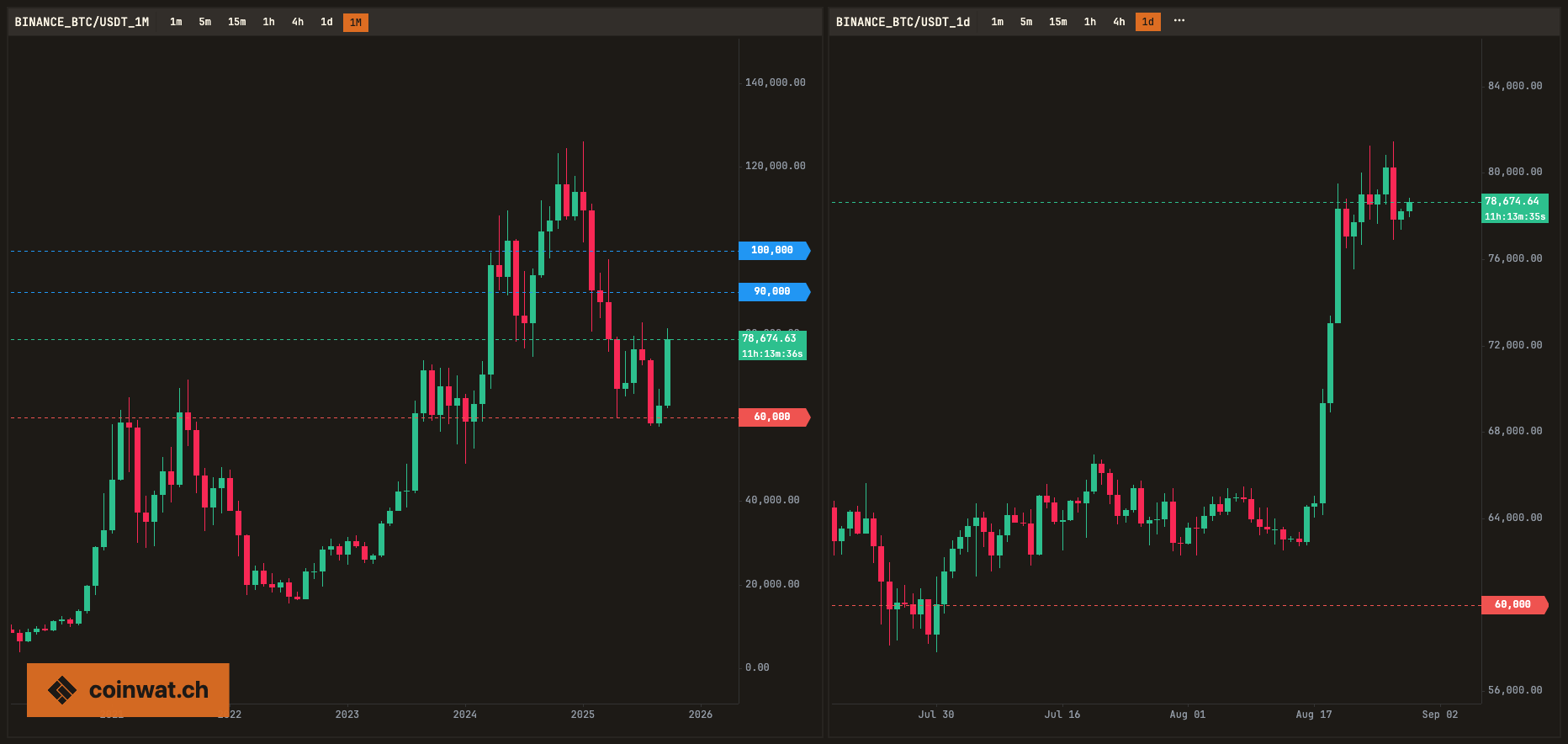
At the architectural level, Coinwatch is engineered for absolute performance. Built upon a sophisticated Valkey cache database layer, the system acts as an ultra fast read layer that isolates the end user from upstream exchange downtime. It offers a unified real time crypto WebSocket API utilizing standardized JSON RPC payloads, capable of broadcasting normalized ticker data instantly to over ten thousand concurrent connections with latency under ten milliseconds. This means that an algorithmic trading bot subscribing to a specific trading pair receives price updates the exact moment the centralized exchange processes them, without the bottleneck of public API rate limiting.
Furthermore, developers can leverage the Coinwatch historical OHLCV API to fetch massive datasets of highly accurate historical open, high, low, close, and volume data via lightning fast REST endpoints. With p99 response times consistently maintained under fifty milliseconds, this data distribution system is perfectly suited for high frequency backtesting of quantitative models in programming environments like Python, Rust, or Node.js.
Beyond just raw data delivery, Coinwatch is built with institutional reliability in mind. It integrates automated telemetry and background workers that continuously monitor active connection counts, API throughput, and cache CPU utilization, reporting health metrics to central monitoring services every minute. While it functions strictly as a robust API infrastructure at its core, Coinwatch also provides a highly customizable developer dashboard. This dashboard allows quants to monitor their API usage, inspect latency metrics, and visualize data streams in real time through modular widgets. In essence, by handling the heavy lifting of data ingestion, normalization, and low latency broadcasting, Coinwatch acts as the indispensable data engine room for modern trading bots.
While TradingView, CoinMarketCap, and Coinwatch form a powerful triad for strategy design, asset filtering, and execution data, the cryptocurrency market demands a multi-faceted approach. To stay ahead of the curve, modern quants frequently expand their toolkit with on-chain data platforms like Glassnode or Nansen, which analyze smart money movements and exchange inflows that traditional OHLCV data cannot reveal. Decentralized exchange trackers are also utilized for algorithmic strategies targeting on-chain liquidity pools. Once Coinwatch provides the core market data, execution engines like CCXT are often implemented by developers to standardize order execution across different centralized exchanges.
As algorithmic trading in cryptocurrency matures, the underlying infrastructure must evolve accordingly. Prototyping with TradingView, filtering with CoinMarketCap, and powering automated models with Coinwatch's historical OHLCV and real time crypto WebSocket APIs establishes a robust, professional grade foundation for any quantitative trading firm or independent developer.